
Treat a character’s promise as story dialogue. Kupid AI’s terms describe companion conversations as fictional and distinguish the characters from people able to make real commitments. You can still make the line useful by recording what it changes inside your scene.
Give the commitment a speaker and a condition
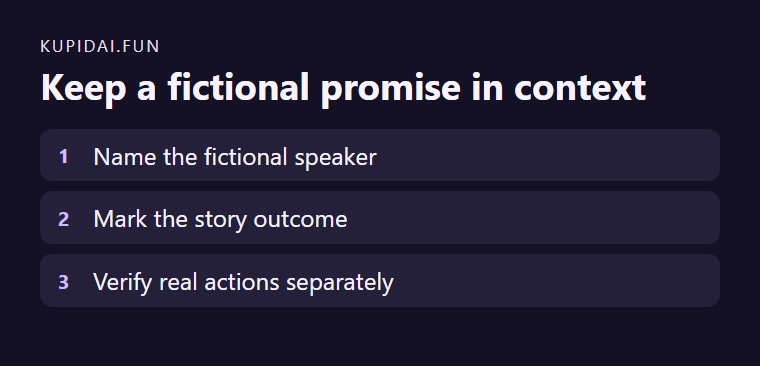
Imagine an adult archivist in a fictional story says, “I’ll leave the key under the blue box after closing.” Your scene note can read “Archivist offered to leave the key after closing. The key has yet to be found.” That captures a proposed action while leaving the story’s confirmation open.
In a later scene, ask the character which box was chosen or decide the outcome in your own story outline. If the reply changes the agreed setting, refer back to the short note. A line spoken by the character and an event accepted into the story belong in different places.
Use real sources for real schedules
A dialogue can invent a shop opening, travel timetable or appointment. If the story sends you to real-world information, confirm that information through the organization that actually manages it. Write a fictional shop name if you only need the scene to move.
Keep the scene note local and avoid entering private addresses or plans as scene material. Kupid’s privacy policy includes discussions in the information a user provides. A short fictional record keeps the useful part of the dialogue and makes later editing easier.